Unihfy Games

Memory Game

Memory Game

memorycard matchingbrain traininglocal multiplayerturn-basedpuzzlefamily

Games > Memory Game

Play Memory Game • Free

Card matching for one to four players on a single screen. Pick numbers or icons, an 8-pair or 18-pair board, and either race your own clock or take turns with everyone else in the room.

Genre: Memory Puzzle

Difficulty: Easy to Medium

About Memory Game

Two boards that are not just easy and hard

The 4x4 grid is eight pairs and the 6x6 is eighteen, which is more than double rather than a small step up. It is not simply that the bigger board takes longer - it crosses the point where you can no longer hold the whole layout in your head, and that changes how you play rather than how hard you have to concentrate.

On the small board most people can genuinely remember every card they have turned over, so a good game is close to perfect. On the large one you cannot, so you end up building partial knowledge - a rough sense of which quarter of the board a particular icon lives in - and accepting that some flips are informed guesses. The second of those is the more interesting game.

Worth knowing before you pick: four players on the 4x4 board splits eight pairs between them and is over almost immediately. If you are playing in a group, 6x6 is the one to choose.

Numbers or icons is not a cosmetic choice

Both themes follow identical rules, but they are not equally easy, and which one suits you is personal. Numbers are read left to right and are hard to confuse, which suits anyone who thinks in sequences. Icons are recognised as whole shapes at a glance, which is faster once you are used to them and much better for younger players who are still reading.

There is a practical difference too. Recalling that a six was in the bottom-left is a different mental operation from recalling that the bottom-left had the anchor, and people are usually noticeably better at one than the other. It costs nothing to try a round of each and find out which one you are.

Playing it with other people in the room

The multiplayer here is entirely local: up to four people take turns on one screen, one device, passing it around or crowding a monitor. There is no online play and no accounts, which is the right call for the kind of game this is.

It changes the game in a way that catches people out. In a solo run, a failed flip costs you a move and nothing else. In a group, every card you turn over is shown to everyone at the table, so a bad guess is a gift to whoever goes next. Good play becomes partly about not revealing anything useful - and once a group works that out, they start playing very differently.
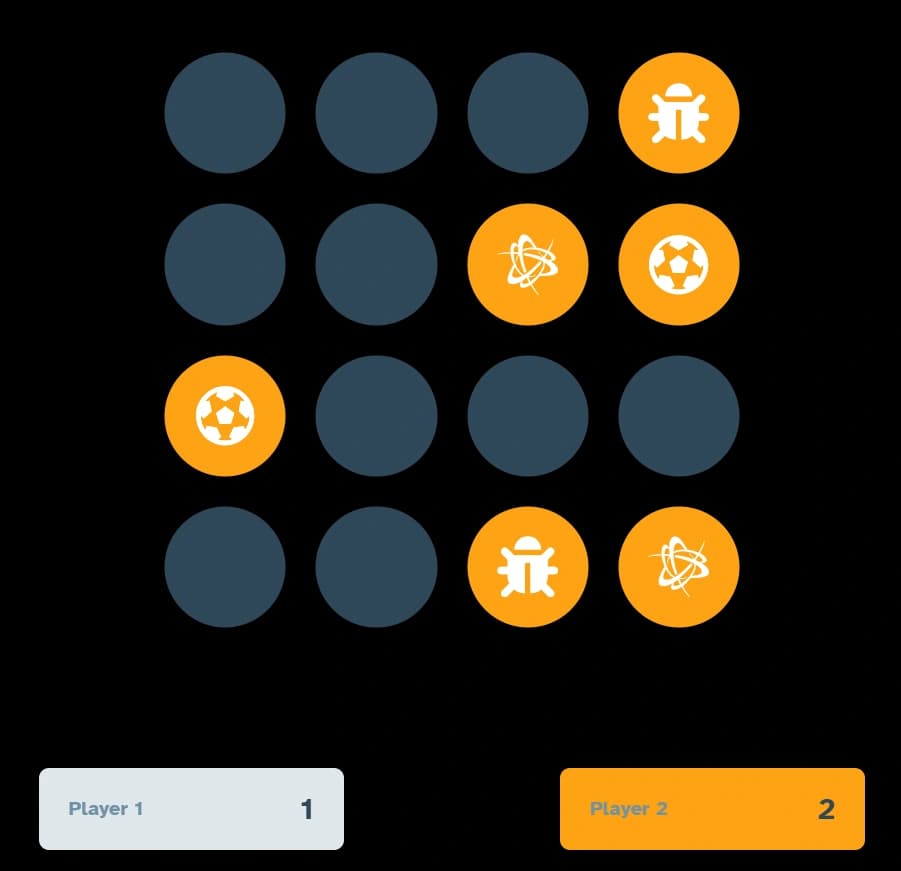
The final screen names the winner rather than just showing scores, which settles arguments quickly.

The game remembers, but only until you close the tab

There is a Resume option, and it works - the board state is kept as you play, so switching to another tab and coming back leaves your game intact. It is worth knowing exactly how far that goes, though, because the game stores it in session storage rather than permanently.

In practice that means one thing: closing the tab or the browser ends the game for good. There is no saved game waiting for you tomorrow and no way to recover a half-finished 6x6 board. If you are partway through a long game with four people, leave the tab open.

A small detail that says a lot

The whole game is set in Atkinson Hyperlegible, a typeface the Braille Institute released specifically for readers with low vision. Its characters are drawn to be hard to confuse with one another - the kind of design where a capital I, a lowercase l and a numeral 1 are deliberately made to look nothing alike.
For a game whose numbers theme asks you to tell digits apart from a glance across a grid, that is a more meaningful choice than it first appears, and it is not something most browser games bother with.
Reviewed By
Kaushik Hirpara

Developer · Game Reviewer

Kaushik Hirpara is a full-stack developer and game reviewer at Unihfy Games. He does most of the work of bringing games to the site — adapting them to run properly in a browser, getting them working on phones, playing them, and writing up what players need to know.

View Profile
Game Created By

Unihfy Games

Memory Game is an original game created and published by Unihfy Games. We continue to improve it with new features, gameplay enhancements, and platform optimizations.

Game created by Unihfy Games.

Proprietary SoftwareAll game credits

How to Play

  • Choose a theme on the setup screen - Numbers or Icons.
  • Choose how many people are playing, from one up to four.
  • Choose a grid: 4x4 gives you eight pairs, 6x6 gives you eighteen.
  • Turn over two cards. If they match they stay up; if not, they flip back.
  • In a solo game the footer tracks your elapsed time and your move count.
  • With two or more players, turns pass around and each player banks the pairs they find.
  • Clear the board to see the results screen and, in a group game, the winner.

Gameplay Preview

Features

One to four players taking turns on a single screen, with a named winner at the end
Two themes - numerals or icons - which suit different kinds of recall
A 4x4 board of eight pairs and a 6x6 board of eighteen
Elapsed time and a move counter tracked live during a solo game
Per-player pair counts during a group game rather than a shared score
Restart to replay the current settings, or New Game to change them
A resume option that survives leaving the tab, though not closing it
A separate mobile menu so the controls do not crowd the board on a phone
Set throughout in Atkinson Hyperlegible, a typeface designed for low-vision readers

FAQs

How do I set the game up?

The setup screen asks three things before you begin: numbers or icons, how many players, and 4x4 or 6x6. Press Start Game once those are chosen. You can come back and change all of them later with the New Game button.

Can I play this game with friends?

Yes, up to four of you on the same device. Turns pass around automatically and each player keeps the pairs they personally uncover, with the winner announced when the board is cleared. It is local only - there is no online multiplayer.

How many pairs are on each board?

Eight on the 4x4 and eighteen on the 6x6. That is a bigger jump than it sounds, since the larger board goes past the point where most people can keep the whole layout in their head.

Which grid should we use for a group game?

The 6x6. Splitting eight pairs between three or four players makes the small board end almost as soon as it has started, whereas eighteen pairs gives everyone several turns and a real chance to come back.

Does it matter whether I pick numbers or icons?

Only in terms of what you find easier to remember - the rules are identical either way. Icons are recognised as shapes and tend to suit younger players and anyone still learning to read, while numbers suit people who think in sequences. Most players are noticeably better at one than the other.

Will my game still be there if I come back later?

Only within the same browser tab. The game keeps your progress while the tab stays open, so switching away and returning is fine and the Resume button will pick it up. Closing the tab or the browser ends the game permanently.

Is there a clock running while I play?

A solo game tracks your elapsed time and how many moves you have taken, and both are shown again on the results screen. Nothing expires though - the timer is there to measure you, not to rush you.

Is it comfortable to play on a phone?

Yes. The board scales to the screen and the Restart, New Game and Resume controls are moved into a Menu button in the header rather than sitting alongside the cards, so the grid gets the full width of a small display.

Ready for a New Challenge?

Take on exciting quizzes, improve your general knowledge, earn XP, collect rewards, maintain your daily streak, and compete with players on the Quiz Arena leaderboard.

Go to Quiz Arena